What To Wear On A Walter Peak Trek
RealNZ keeps its what-to-bring list short: covered non-slip shoes, long trousers, warm clothing and a camera. Here is how that list turns into an outfit for a 40-minute trek, a lake cruise and tea at a 1908 homestead.
Short answer
Wear covered non-slip shoes or boots, long trousers and layered warm clothing, and bring a jacket, sunscreen, sunglasses and a camera. RealNZ provides riding helmets and wet weather clothing on the Walter Peak trek. Avoid loose clothing, scarves and accessories that could catch. The outing runs 3 hours 45 minutes from Steamer Wharf, from $155.87 per person.
The outfit question matters more on this trek than on most Queenstown rides, because the day spans three settings in under four hours. You stand on an open steamer deck crossing Lake Wakatipu, sit in a saddle on exposed high country farmland, then take tea inside the Colonel's Homestead, a building that dates from 1908. RealNZ, the operator, keeps its guidance to a single short list: covered non-slip shoes or boots, long trousers, warm clothing or a jacket, sunscreen and sunglasses, a camera, and personal medication, while avoiding loose clothing, scarves and accessories that could catch.
That list is the operator's own, published on its Walter Peak horse treks page, and it is the backbone of everything below. Around it sits the practical detail: what Queenstown's weather actually does, what the operator hands you at the farm, what children should wear, and how the answer changes for the Cardrona and Central Otago rides also covered on this site. The core product this page anchors to is the Choice of Vessel, Tea and Scones outing, 3 hours 45 minutes door to door, rated 4.6 across 317 reviews, from $155.87 per person, which is the most reviewed horse trek experience sold here.
What Should You Wear For Horse Riding In Queenstown?
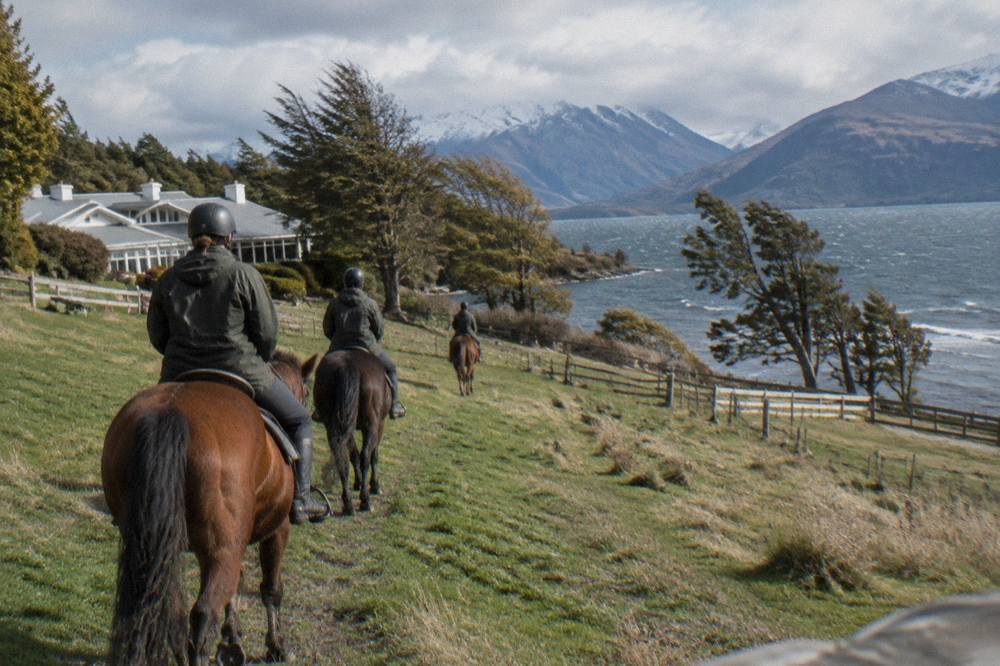
Start with three layers on top, long trousers, and closed shoes with a flat sole and a heel of some kind, then plan around wind and sun rather than around the season alone. RealNZ asks riders to bring covered non-slip shoes or boots, long trousers, warm clothing or a jacket, sunscreen and sunglasses, and it provides the riding helmet and wet weather gear at the farm.
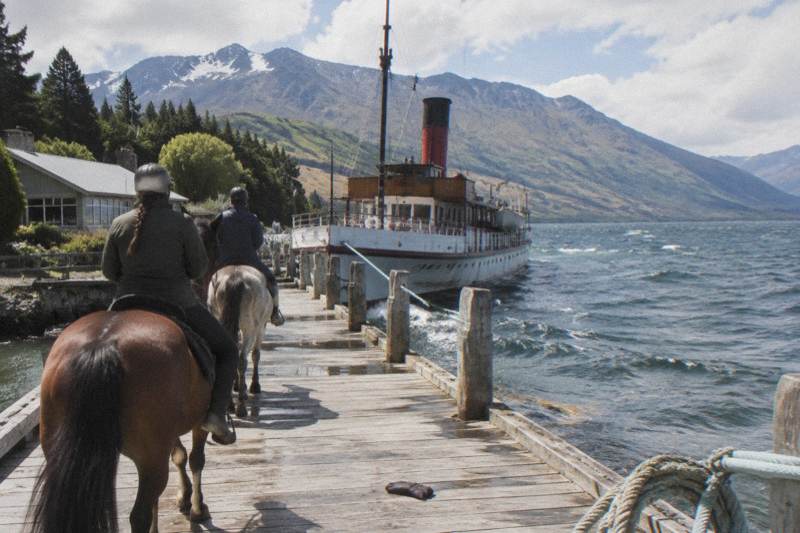
The reason layers carry so much weight is the boat. The cruise to Walter Peak takes 45 minutes each way on the TSS Earnslaw or 35 minutes each way on the Spirit of Queenstown, and much of that time can be spent on an open deck with a headwind off the lake. Lake Wakatipu is New Zealand's longest lake and it funnels weather straight into Queenstown Bay, so a t-shirt that felt right at the Steamer Wharf meeting point can feel thin ten minutes out on the water. A base layer, a warm mid-layer and a shell you can stuff in a daypack cover the whole outing, because each layer earns its place in a different one of the three settings.
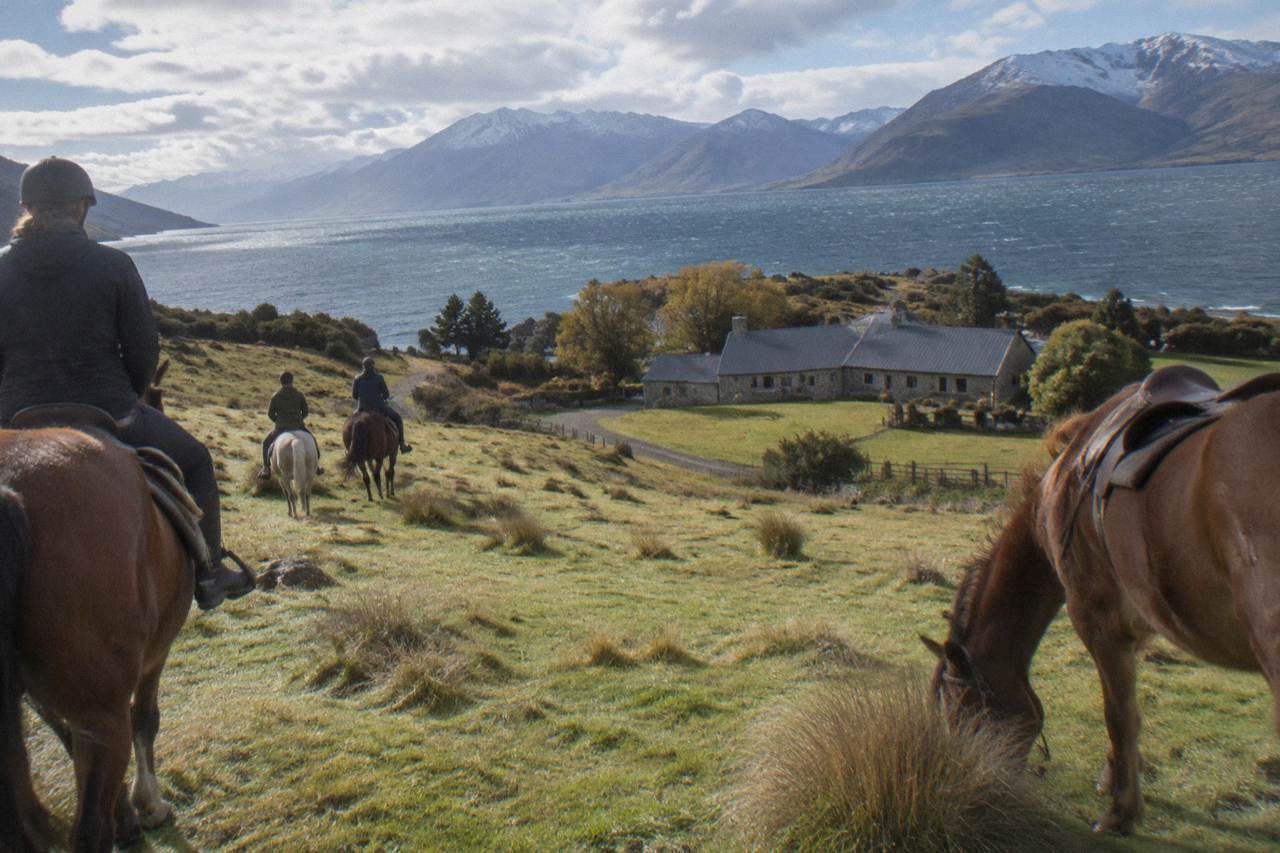
The saddle time itself is short. The guided trek is a 40-minute ride across rolling farmland toward a lookout, and RealNZ describes the riding as easy and more suited to first-time or novice riders, with groups of up to 6 per guide. That means the clothing does not need to survive hours of rubbing; it needs to be comfortable for under an hour on a horse, warm at a wind-exposed viewpoint, and presentable afterward for tea, coffee, scones and muffins at the Colonel's Homestead Restaurant.
For a first riding outfit, the essentials compress into a short table:
| Item | What RealNZ asks for | Why it matters here |
|---|---|---|
| Trousers | Long trousers | Prevents saddle and rein rubbing over 40 minutes |
| Upper body | Warm clothing or a jacket | Open deck crossing plus wind at the lookout |
| Sun protection | Sunscreen and sunglasses | High-country UV, including on overcast days |
| Extras | A camera, personal medication | Remote site; bring what you need with you |
The meeting point is the RealNZ Visitor Centre at Steamer Wharf, 88 Beach Street, Queenstown, and the booking page asks riders to arrive 20 minutes before departure, so anything you bring needs to be carryable for that walk and for standing around on the pier. There is more detail on the practicalities in how the booking and departure work.
What Shoes Should You Wear On The Walter Peak Trek?
Covered, non-slip shoes or boots with a flat sole are the requirement, and anything with a smooth wet-weather sole, an open toe or a tall bulky tread is the wrong choice. RealNZ names covered non-slip shoes or boots explicitly on its what-to-bring list, and the trek's mount, dismount and stirrup work all assume a shoe that stays put.
A boot with a small heel is the classic answer, and it remains the best one, because the heel stops the foot sliding forward through the stirrup. It is not mandatory for this trek; the operator's wording asks only for covered, non-slip footwear. What fails is predictable: sandals and jandals expose the foot, slick-soled dress shoes lose grip on a wet deck, and very chunky hiking soles can sit awkwardly in a stirrup and trap the foot. Covered non-slip shoes or boots, as RealNZ asks, are the safer middle ground and double as a walking shoe for the gardens and farmyard time built into the day.
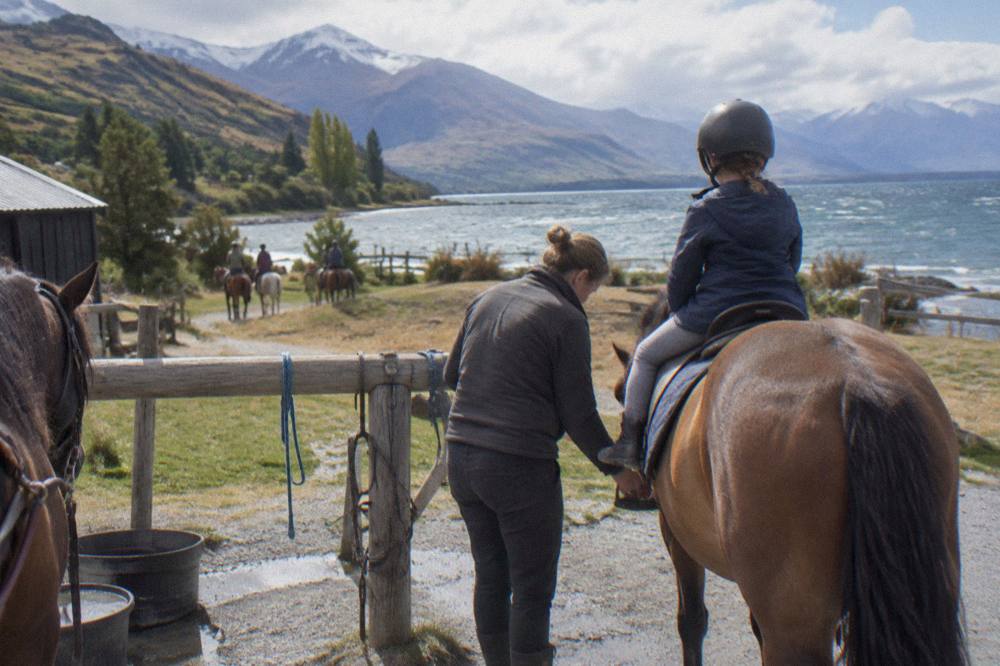
The lake crossing is the part people forget when choosing shoes. Non-slip matters as much on the boat as in the stirrup, and the same shoe handles both. Socks should be ordinary and comfortable; long trousers will cover the ankle anyway, which matters because stirrup leathers and saddle edges press on the shin.
Sneakers versus boots is a fair question for first-time riders, and the honest answer is that both work on a 40-minute novice ride. If you own nothing suitable and do not want to buy, a closed everyday trainer with a textured sole meets the operator's stated requirement. If you ride more than once a year, a low ankle boot with a heel is the better long-term buy. The blog post on first-time riding outfits works through the same question for riders with no gear at all.
Two versions of the same RealNZ outing are sold on this site, and the clothing answer is identical for both. The Choice of Vessel, Tea and Scones page, from $155.87 and rated 4.6 across 317 reviews, lists tea, coffee, scones and muffins and a choice of vessel among its inclusions. The Return Cruise, Safety Equipment page, from $158.27 and rated 4.3 across 118 reviews, is the same product and lists snacks and safety equipment. Whichever page you book through, the ride is 40 minutes of a 3 hour 45 minute outing from the same Steamer Wharf start.
What Trousers Work Best For A Walter Peak Trek?
Long trousers, full stop. RealNZ asks for them by name, and on a 40-minute novice trek almost any long trouser that lets you move will do the job: jeans, leggings, or hiking trousers all appear on real riders. The goal is a smooth inner-leg seam and no flapping material, because the saddle edge and stirrup leathers press on the inner calf and thigh.
The debate between jeans and leggings is genuine, and the answer leans on thickness. Denim gives better protection between leg and leather and holds its shape in the saddle, but a thick inseam can press on longer rides; at 40 minutes that rarely bites. Leggings are comfortable and quick-drying but offer almost no protection if a horse brushes you against a fence line or scrub, and the farmland route crosses open country. Hiking trousers split the difference and dry fast, which matters if rain arrives on the return cruise.
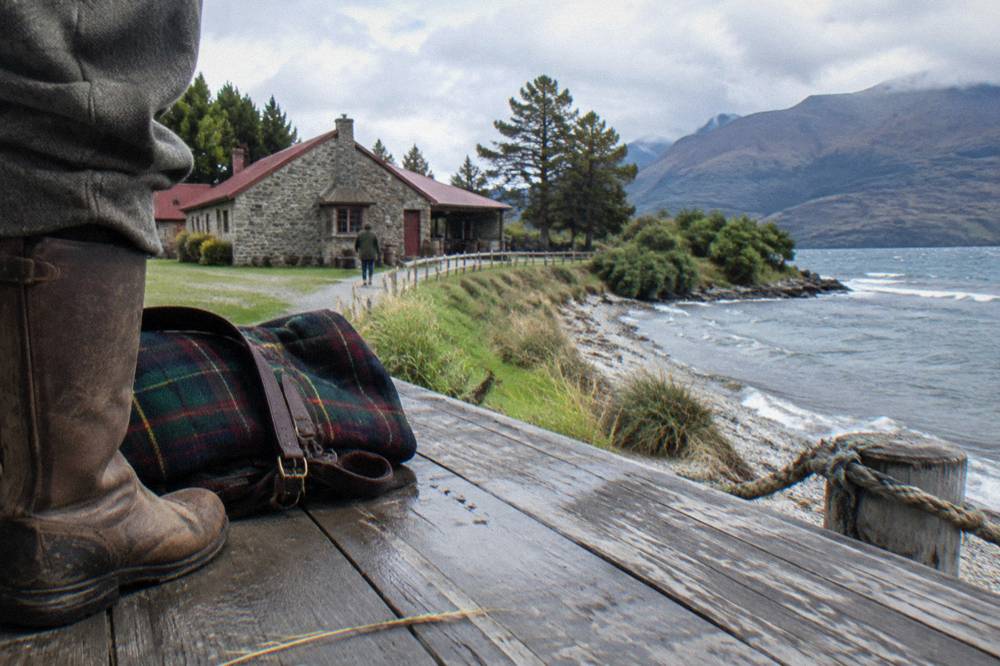
Shorts are the one clear no. Beyond the sun and wind, bare legs against saddle leather for forty minutes is uncomfortable at best, and the operator's list rules them out anyway. Skirts and dresses fail for the same reason in the saddle. If you want to wear something else for the town end of the day, a small daypack in the boat's cabin space solves it, though the less you carry to a remote site the better; RealNZ notes the farm has limited emergency access, so travel light and bring what you actually need.
Here is how the common options compare for this specific trek:
| Trousers | Comfort in 40 minutes | Protection | Practical notes |
|---|---|---|---|
| Jeans | Good if not skin-tight | Good | Thick inseam can rub on longer rides |
| Leggings | Very good | Low | Quick-drying, little scratch protection |
| Hiking trousers | Good | Moderate | Dry fast after rain or spray |
| Shorts | Fails the operator list | None | Bare legs on leather for 40 minutes |
A fuller treatment of the jeans-versus-leggings trade-off, including what frequent riders conclude, is in should you wear jeans or leggings for horseback riding.
How Do You Dress For Queenstown's Changeable Weather?
Dress in layers you can shed on the boat and put back on at the lookout, because Queenstown's temperatures swing hard between seasons and within a single afternoon. RealNZ's own seasonal guide runs 19 to 29 °C in summer, 15 to 25 °C in autumn, 5 to 10 °C in winter and 9 to 15 °C in spring, and the operator says treks may be modified or cancelled due to weather, horse behaviour, or guide assessment.
Those temperature bands are the operator's, published for Queenstown, and RealNZ adds a useful planning note: the Queenstown forecast is a good guide for Walter Peak. The farm sits across the lake, exposed to the same systems, so the MetService Queenstown forecast is the sensible thing to check the evening before. What the numbers do not capture is wind chill on the water and at the viewpoint, which can take a 15 °C afternoon down to something that wants a real jacket.
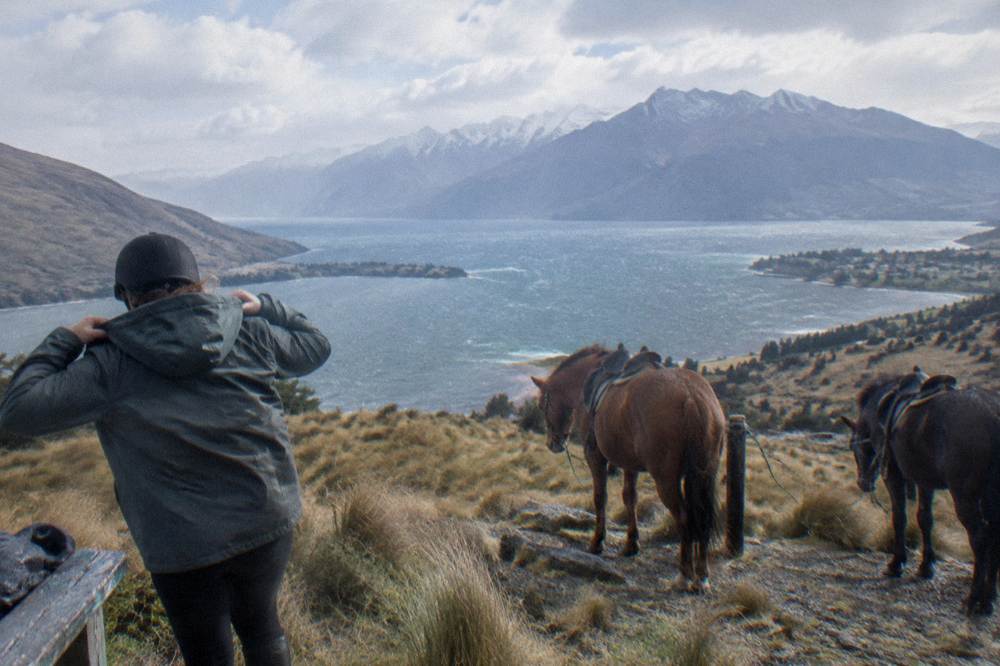
A three-layer system answers all four seasons. A breathable base, a warm mid-layer such as a fleece, and a wind-and-water shell cover the cruise deck, the ride and the homestead garden. Sunscreen belongs in the bag even in winter, because high-country UV is strong on bright days and the operator lists it alongside sunglasses. Wet weather clothing is provided on the trek itself, so a full rain set of your own is optional; a light shell for the boat is enough on most days.
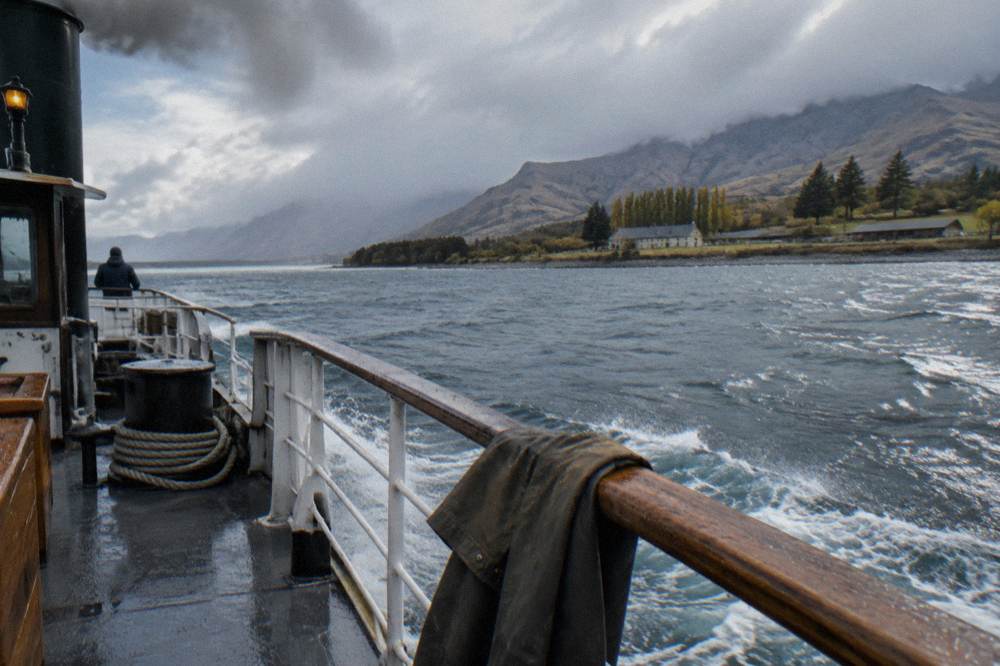
What each season asks of the outfit:
| Season | RealNZ temperature range | Outfit adjustment |
|---|---|---|
| Summer, December to February | 19 to 29 °C | Base layer, sun protection, light shell for the deck |
| Autumn, March to May | 15 to 25 °C | Base plus mid-layer, jacket for the cruise |
| Winter, June to August | 5 to 10 °C | Full three layers, gloves and warm hat |
| Spring, September to November | 9 to 15 °C | Three layers, windproof outer, sunscreen |
The seasonal question is bigger than clothes, and the guide to when to go horse riding in Queenstown takes it on properly, including what a winter booking means for the day's shape.
Departure times are not published and the booking calendar shows the slots for your date, so check it when planning; no timetable is published in advance. Every one of the seven tours covered here states a full refund when cancelled at least 24 hours before the start, and the weather-cancellation detail is covered in what happens when weather cancels a trek.
What Does RealNZ Provide On The Walter Peak Trek?
Safety helmets and wet weather clothing are provided, per RealNZ's own extra information for the trek, so a riding helmet and a rain shell do not need to travel with you. The tea at the Colonel's Homestead is included too, meaning you carry clothes and camera, not catering or equipment.
The helmet point matters because it removes the most awkward item from a packing list. You cannot bring a riding helmet on a holiday easily, and you do not need to. RealNZ provides safety helmets, and the group rides with up to 6 riders per guide, all abilities including first-time riders. The broader helmet picture across Queenstown rides is not uniform; helmets are stated as provided on 4 of the 7 tours covered on this site, and the page on helmets across Queenstown rides runs through the details.
Wet weather clothing is the other provided item. If rain sets in during the trek, the operator supplies gear to keep riders dry, which is why the personal jacket recommendation is really about the boat and the lookout, not about riding in a downpour. Hats under helmets are a winter question: a thin beanie or headband usually fits beneath a provided helmet, while a bulky knit does not, so keep headwear slim in the cold months.
The inclusions list on the most reviewed page is short and concrete: round-trip cruise on the TSS Earnslaw or the Spirit of Queenstown, morning or afternoon tea with tea, coffee, scones and muffins, 40 to 45 minutes of horse trekking, and a nature guide. The Return Cruise, Safety Equipment page, the same RealNZ product, words it as return cruise, guide, snacks, safety equipment and horseback trek. Neither asks you to bring anything beyond the what-to-wear list above.
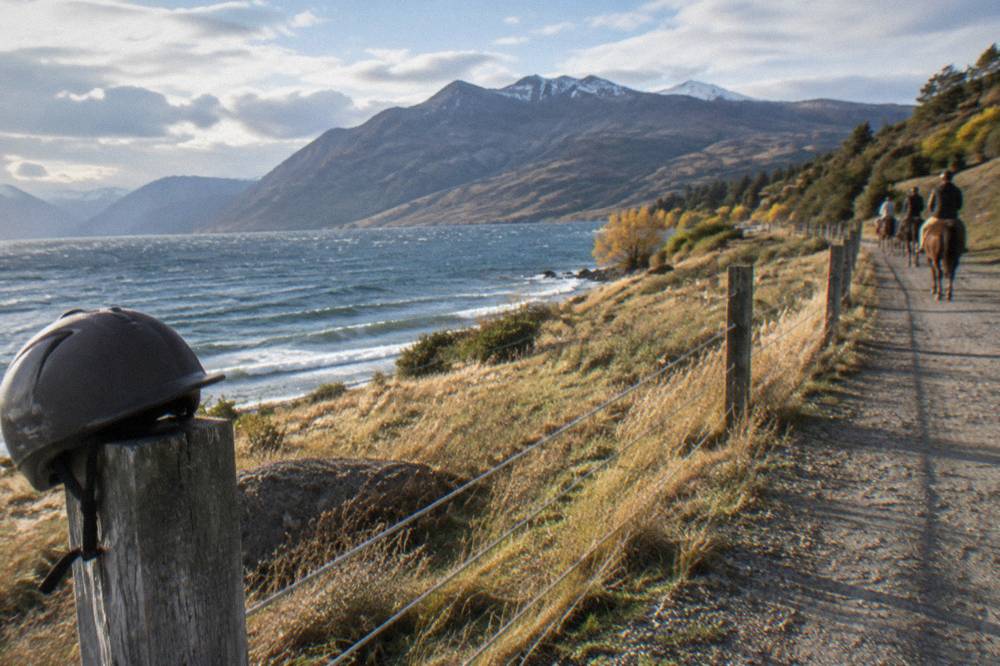
What Should Children Wear On The Walter Peak Trek?
Children follow the adult list exactly, with two additions: trousers that fit properly rather than rolled-up adult sizes, and a warm layer they cannot lose, since RealNZ requires children under 14 to be accompanied by a responsible adult and sets a minimum age of 7 and minimum height of 120 cm for the ride.
The rules are firm and the operator applies them strictly. Minimum age 7, minimum height 120 cm, maximum rider weight 95 kg, and riders must mount and dismount unaided and keep balance and control. Children under 14 must be accompanied by a responsible adult. None of that is clothing, but it shapes the outfit: a child who can mount unaided in a helmet needs shoes that grip and trousers that stretch, not fancy riding wear.
Practical notes from the day's structure help. The outing is 3 hours 45 minutes total with the cruise and tea, so children feel the cold on the boat before they feel any nerves in the saddle. Gloves and a slim warm hat matter more for kids in the shoulder seasons. Tie long hair back low so the helmet sits properly, and the operator's advice against loose accessories applies doubly to children, whose scarves and drawstrings are the classic catch hazard. The dedicated guide to the trek with kids covers the age and height rules in full.
What Should You Wear On The Cardrona And Central Otago Rides?
The Cardrona and Central Otago rides sold here are longer in the saddle than Walter Peak, so the same core outfit matters more: the Cardrona rides run 2 to 3.5 hours and the Golden Hills 2-Hour Trek is a full two-hour ride, where seam comfort and boot quality start to outweigh convenience.
The Cardrona operator's own horse riding page is the reference for those rides, and its two named products pull different riders. The Small-Group Gold Discovery Trek, 2 hours, from $311.44, rated 4.9 across 158 reviews, takes ages 5 and up with no experience needed and includes a Cardrona River crossing, so shoes that can get wet and trousers that dry fast are the right call there. The Pub Trail Trek, Intermediate Level, 3 hours 30 minutes, from $396.54, rated 5.0 across 274 reviews, demands trotting and probably cantering with high fitness, so proper riding trousers and a heeled boot stop being optional and become the difference between a good ride and a sore one.
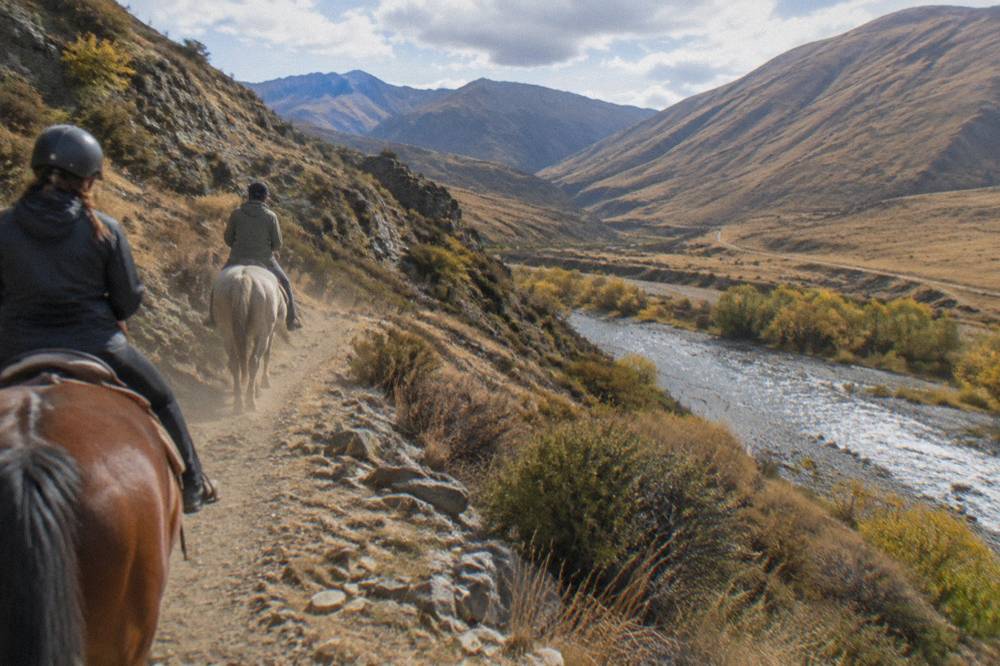
In Central Otago, the Golden Hills 2-Hour Trek from Golden Hills Horse Treks, 2 hours, from $102.11, rated 4.9 across 56 reviews, matches horses to rider ability and provides riding helmets, but lists food, drinks and hotel transport as not included, so carry water and a snack in a small pack. The Cromwell scenic ride by The Sunday Country Club, from $176.00, is a new option with no reviews yet and offers ride lengths of 1 to 3 hours; the same long-trouser and closed-shoe rule applies. The comparison between the two regions, including what each start point means for your day, is laid out in Walter Peak versus Cardrona horse riding.
How the clothing emphasis shifts by ride:
| Ride | Time riding | Key clothing difference |
|---|---|---|
| Walter Peak trek and cruise | 40 minutes | Layers for the boat matter as much as the saddle |
| Gold Discovery Trek, Cardrona | 2 hours | Quick-drying trousers; river crossing stated on the ride |
| Pub Trail Trek, Cardrona | 3 hours 30 minutes | Proper riding trousers and boots; heeled footwear earns its keep |
| Golden Hills Trek, Cromwell | 2 hours | Carry your own water and snack; helmet provided |
What Should You Not Wear On A Walter Peak Trek?
Loose clothing, scarves and accessories that could catch are the named noes on the operator's list, alongside shorts, skirts, open shoes and smooth soles. Anything that flaps near a horse, dangles, or can slip off a foot has no place on this ride, and hoods tied loosely fall into the same trap.
The reasoning is mechanical rather than fussy. A scarf or loose sleeve can catch on tack, on a branch, or on a fence line as the horse walks past. A shoe without a back can drop off mid-ride, and a dropped shoe on farmland is a delayed departure for the whole group of up to 6. Long, loose hair behaves the same way as a scarf, so tie it low and secure it under or behind the helmet strap. Jewellery that swings, large earrings and dangling bracelets all repeat the pattern.
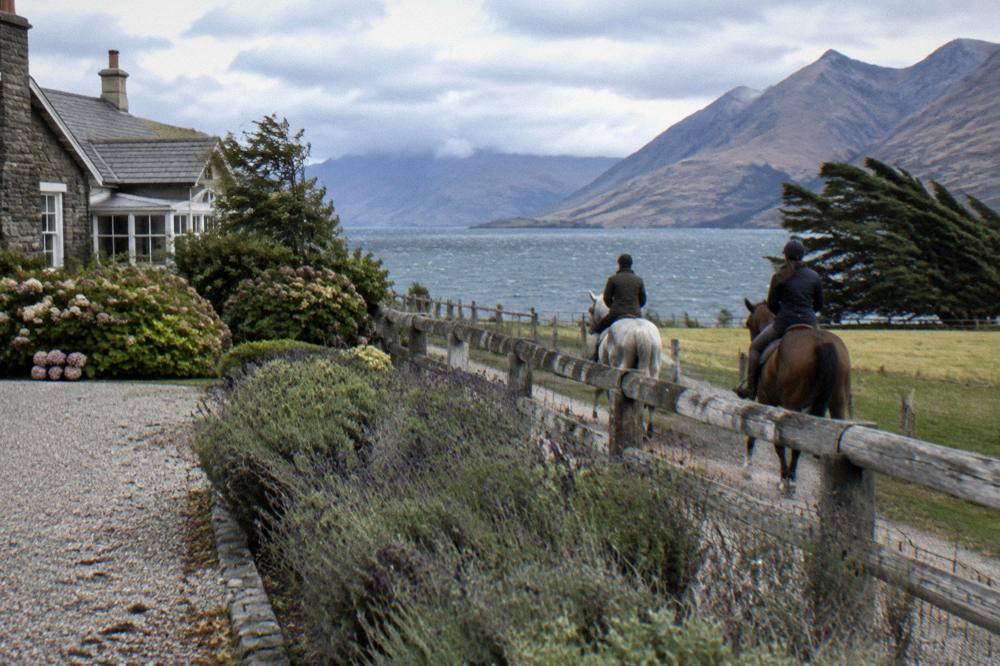
There is also a short list of things better left at the hotel: anything you would grieve losing on a farm, bulky bags beyond a small daypack, and drones or tripods that turn a small-group outing into a logistics exercise. The outfit that works is deliberately plain, and the plain version photographs better at the lookout anyway. RealNZ recommends advance booking, notes vessel space is limited, and the meeting point at 88 Beach Street is a short walk from central Queenstown, so arrive 20 minutes early, dressed and ready, with the small list in hand. If more planning detail would help, the full list of treks pulls the whole day together.
Common Questions About What To Wear On A Walter Peak Trek
What Shoes Should I Wear On The Walter Peak Horse Trek?
Covered non-slip shoes or boots, per the operator's what-to-bring list. A small heel is ideal but not required; avoid sandals, slick soles and very chunky hiking treads.
Does RealNZ Provide A Helmet For The Horse Trek?
Yes. Safety helmets and wet weather clothing are provided on the Walter Peak trek, so you do not need to bring either.
Can I Wear Jeans On The Walter Peak Horse Trek?
Yes. Long trousers are required, and jeans, leggings or hiking trousers all work for a 40-minute ride. Avoid skin-tight seams that press into the leg and loose hems that flap.
How Cold Does It Get On The Lake Cruise To Walter Peak?
Queenstown runs 19 to 29 °C in summer and 5 to 10 °C in winter, per RealNZ's seasonal guide, and wind chill on the open deck adds to that. Bring a warm layer and a jacket regardless of season.
What Should Children Wear On The Horse Trek?
The adult list applies: long trousers, covered non-slip shoes, warm layers and sunscreen. Add gloves and a slim beanie in colder months, tie long hair back low, and skip scarves and loose accessories.
Should I Wear Different Clothes For The Cardrona Rides?
The same basics apply, but the rides are longer, 2 to 3.5 hours, so seam comfort, a heeled boot and quick-drying trousers matter more. The Gold Discovery Trek states a river crossing, so check with the operator about footwear for the crossing.